Applying to university as a mature student (UK)
Mihai Flueraru
December 7, 2025
If you want to apply to a university as a mature student, you are in the perfect place.
Many adults feel unsure about the process — the documents, the entry requirements, the deadlines, the personal statement, or whether their age and experience will help or hold them back.
This guide explains everything clearly: why apply, who is eligible, how the application works, what documents you need, how Student Finance fits in, and what to expect before enrolment.
Why apply as a mature student
Choosing to go to university as an adult is one of the most life-changing decisions you can make. Mature students often study for three main reasons:
Career progression
A degree opens access to jobs that require formal qualifications — management, health, tech, business, social care, and many more.
Stability
University gives you structure, a sense of direction, and access to long-term opportunities.
Higher pay
UK graduates earn significantly more over their lifetime. Even one qualification can move you into a new salary band.
Many mature students study for their family, for a better future, or simply because they’re ready for something more.
Eligibility & entry requirements
The good news is that entry requirements for mature students are flexible. Universities do not judge you based on being out of education for years — they look at your experience, motivation, and potential.
Typical requirements include:
- Being 21 or older when the course starts
- Meeting residency rules for Student Finance (settled, pre-settled, ILR, refugee status, etc.)
- Having Level 3 qualifications OR work experience (depending on the course)
- Meeting English language requirements (GCSE, functional skills, internal test, etc.)
If you don’t have A levels or other qualifications, you can still apply through routes designed for adults.
How to apply as a mature student
Applying to university as a mature student follows the same general structure as traditional applicants, but the flexibility is much greater.
Let me explain.
Choose route & course (Foundation/Access/HNC-HND/Top-Up)
Before you apply, you must choose the right starting point based on your background:
- Foundation Year (4 years) – for students with no formal qualifications
- Access to Higher Education Diploma – intensive Level 3 route for health/science/social sciences
- HNC/HND – practical routes that lead to a Top-Up degree
- Direct entry into Year 1 – if you already have Level 3 qualifications
Mature students have multiple pathways — you don’t need A levels to start university in most cases.
Documents checklist
Having your documents ready speeds up the entire application:
- ID or passport
- BRP (if applicable)
- Share code (to prove residency/immigration status)
- Proof of address (bank statement, council letter, etc.)
- Qualifications (certificates, transcripts)
- Updated CV
- Personal statement
- Reference (UCAS or direct)
Some universities may request additional documents depending on your course.
Submit application (UCAS or direct) + interview (if needed)
There are two ways to apply:
- UCAS (main method for most universities)
- Direct application through the university website
Many universities invite mature students to an interview, either online or on campus.
This is usually informal — they want to understand your goals, background, and motivation.
English proof (internal test or alternatives)
If English is not your first language, you may need to show:
- GCSE English (UK)
- Functional Skills Level 2
- IELTS / Pearson / Cambridge
- OR an internal university English test, which is very common for mature students
Most universities accept internal tests for the Foundation Year and many Level 4 programmes.
Offer → Student Finance → pre-enrolment → enrolment day
Once your application is successful:
- Receive your offer letter
- Apply to Student Finance England (SFE)
- Complete pre-enrolment tasks (upload ID, confirm details, sign student contract, etc.)
- Attend enrolment day on campus
When applying for Student finance, you can usually get:
- Tuition Fee Loan (full 100% of your fees)
- Maintenance Loan (living costs)
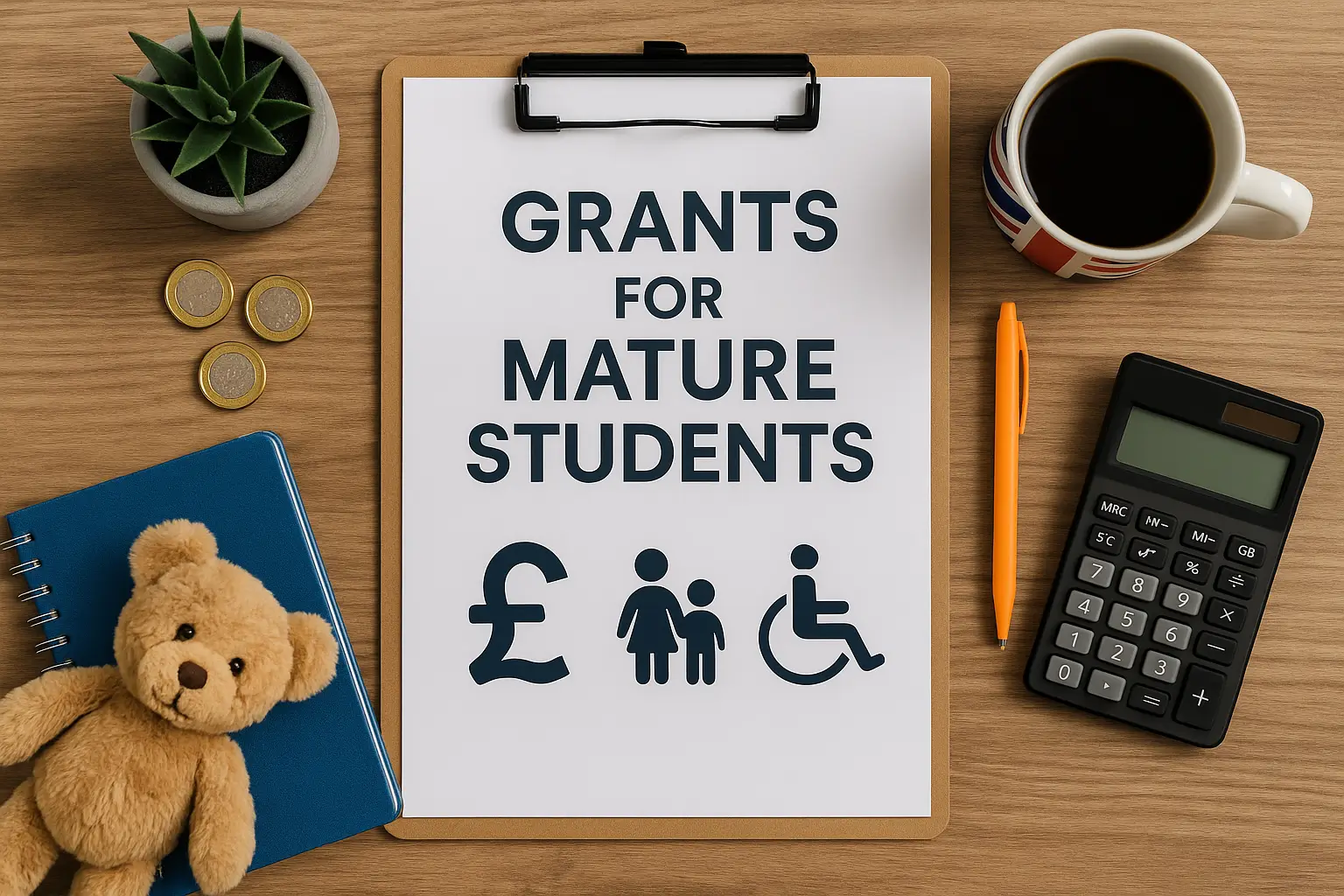
- Grants for parents (Childcare Grant, PLA, ADG)
On the College enrolment day, you’ll typically:
- Show your ID
- Take your student photo
- Receive your student email and timetable
- Meet your academic advisor
Application timelines & deadlines for mature students (Sep/Jan intakes)
Unlike younger applicants, mature students benefit from rolling admissions at many universities.
However, there are still deadlines to be aware of.
September intake
- The main academic year starts
- Applications open as early as January
- Best time to apply: February – July
- Final deadlines vary by university
- Most places fill by August
January intake
- Second major intake
- Popular for mature students
- Best time to apply: September – December
- Fewer courses than September, but still many options
Apply early (processing times)
Applying early helps because:
- Student Finance can take 4–8 weeks
- Universities fill limited spaces
- Your interview and documents take time to process
Personal statement for mature students (structure & tips)
Your personal statement is one of the strongest parts of your application as a mature student.
Make sure to include:
- Why you want to study now
- Your career goals
- Work experience
- Life experience that shaped your decision
- Why you chose this course
- Why this university fits your situation
- Study skills you’ve developed over time
Focus on your motivation and commitment — universities value this highly.
UCAS reference for mature students (who can be your referee)
Your UCAS reference is as important as your personal statement.
There’s also a myth that your referee needs to be your teacher. Acceptable referees include:
- Employer or manager
- Mentor or supervisor
- Community leader
- Former teacher or tutor
- Volunteer coordinator
They should comment on your:
- Work ethic
- Reliability
- Communication skills
- Ability to study
- Motivation and discipline
This carries a lot of weight for mature applicants.
Study plan for going to university as a mature student
Balancing work, family, and education requires planning.
Tips for success:
- Create a weekly study schedule
- Use commuting time for reading or practice quizzes
- Choose evening or blended learning options if needed
- Inform your employer early if you need study flexibility
- Use university support services (academic help, wellbeing, childcare info)
- Build habits slowly: 30–60 minutes of study per day is better than long sessions once a week
Mature students often outperform younger students because they have clear goals.
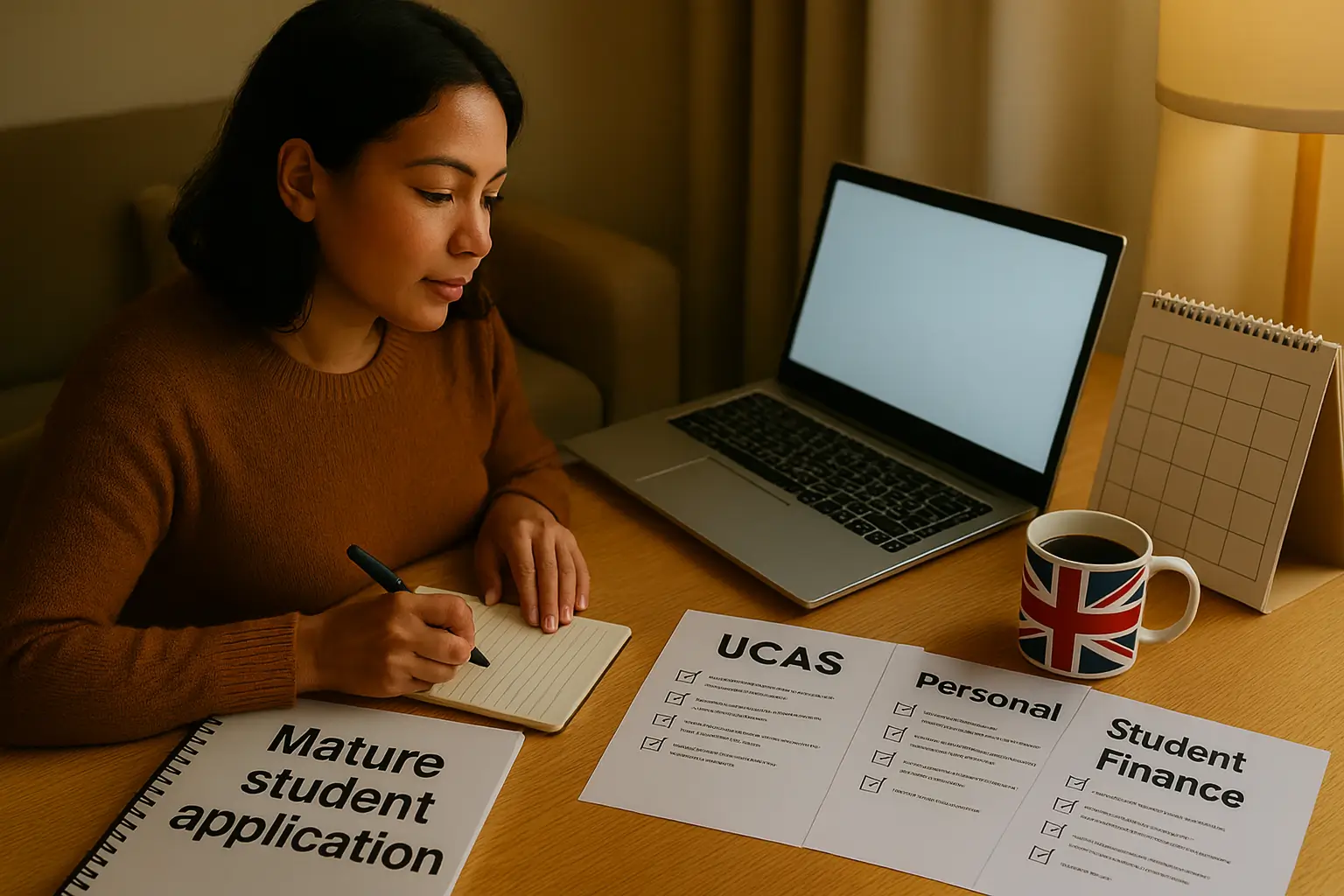
Mature student application form
Many agencies provide a Mature Student Application Form to help adults structure their application and gather documents.
This form usually includes:
- Personal details
- Residency details
- Employment history
- Education history
- Course preference
- Document uploads
- Notes for personal statement
- Support needs (childcare, disability, etc.)
FAQs about applying to university as a mature student
Can I apply if I’ve been out of education for many years?
Yes. Universities welcome older applicants. Many mature students return after 5, 10 or even 20 years.
Can I apply if I’m on pre-settled / settled status (or ILR)?
Yes. Most mature students with pre-settled, settled, or Indefinite Leave to Remain are eligible for university and Student Finance (depending on work/residency conditions).
Should I apply via UCAS or directly to the university?
It depends:
- UCAS is required for many full-time degrees.
- Some universities allow direct applications, especially for Foundation Year or adults-only routes.
Enrollmate can handle both.
How many courses/unis should I apply to as a mature student?
Through UCAS: up to 5 choices.
Direct applications: unlimited, depending on university rules.
Do mature students have different application requirements?
The process is similar, but universities focus more on your experience, motivation, and goals, not just academic grades.